
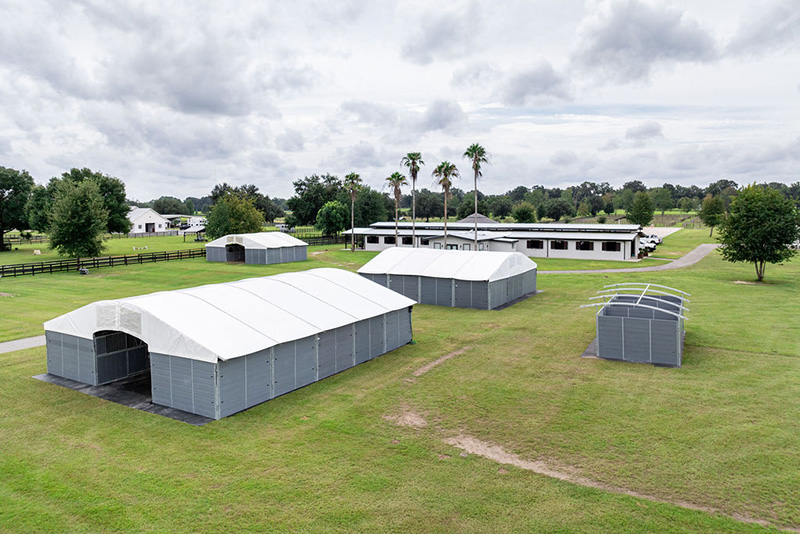
Horse owners choosing between temporary and permanent stalls should think about the length of time they’ll need the stall for their horse.
The key distinction between temporary and permanent stalls lies in their intended duration of use, not the materials used. According to standards like the International Building Code (IBC), a temporary structure is generally in place for under 180 days. Temporary stalls are an affordable solution for horse owners needing short-term shelter. Conversely, permanent stalls are designed for long-term use and involve considerable time and financial investment. Portable horse stalls offer flexible, temporary housing options in different environments. Selecting stalls from a reputable supplier ensures safety and quality, providing your horse with the optimal environment to thrive.
This article provides useful information about temporary, portable and permanent horse stalls. It highlights their advantages and offers tips to help you choose the ideal stall for your horse, making it easier to find one that fits your needs. You will also learn about different safety features and key regulations.
Types of Permanent Structures, Temporary Stalls and Portable Horse Stalls
Permanent stables provide excellent weather protection for horses and added convenience. However, for horses that travel often, they might not be the best option.
Seasonal peaks in horse ownership, such as during horse shows or breeding season, may require additional temporary stabling. Disease outbreaks may require temporary stalls to quarantine horses and prevent the spread of illness. Natural disasters, such as hurricanes, can also require temporary shelters to provide emergency housing.
Most portable stalls are made from high-quality materials, such as galvanized steel or HDPE panels, to ensure durability and safety, and to withstand frequent assembly and disassembly.
Portable run-in shelters are temporary stalls that offer ample space for horses to move around and exercise. They are easy to set up and transport, and can be produced at scale for events and other temporary needs. However, it’s important to remember that portable stalls offer less security, weather protection and ventilation, making them unsuitable for permanent housing.
Panel stalls use interlocking panels to create a secure and comfortable space for horses. They are easy to clean and customize for events and other temporary stabling needs. Keep in mind that they can be heavy to move and the thin metal edges may make them less durable than permanent stables. If you’re considering panel stalls, it’s best to purchase them from a reputable supplier to ensure they’re made safely and well-crafted to prevent injury to your horse.
Pipe stalls are lightweight, easy-to-assemble temporary stalls ideal for frequent use. They are typically constructed with vertical or horizontal piping and provide excellent airflow and ventilation, ample space, increased visibility, low maintenance and flexibility. However, they are more vulnerable to the elements, more exposed to other horses and the metal pipes are more susceptible to corrosion over time.
Permanent stables require a weeks-long permit process and a concrete foundation, which can cause costly delays for event organizers and property investors. Temporary structures avoid these issues by complying with codes that specify short-term use, such as the IBC’s 180-day limit, enabling quick deployment.
Cost and Maintenance Considerations
The expense of maintaining temporary stalls is usually lower than that of permanent stalls because they require less upkeep and repairs, making them a more affordable option for horse owners. This smaller initial cost allows horse owners to allocate funds toward other important needs, such as feed, veterinary care and training, without compromising basic housing requirements.
Proper maintenance is essential for the longevity and safety of temporary stalls, involving regular inspections and repairs. Routine checks of structural integrity, secure fastenings and safe surfaces help prevent injuries and prolong the stalls’ usable life. Their reusability and ability to be moved or stored when not in use also enhance their overall value and long-term savings.
Safety and Security Features of Permanent Stables and Portable Horse Stalls
Safety standards, such as secure latches and sturdy construction, are crucial for temporary stalls to protect horses’ well-being. Preventing the shifting and collapse of temporary stalls is vital for horse safety and can be achieved through proper anchoring and assembly.
Always ensure you have enough space for your horses. Think about how many horses you need to house, since temporary stalls come in different sizes.
Consider how much assembly you prefer. Pipe stalls are the simplest to transport, whereas panel stalls provide the greatest adjustability. Run-in shelters are a spacious alternative but may require more time to set up. Many suppliers can also manage setup and installation for you.
Regular inspections and maintenance are crucial to ensuring the safety and security of temporary stalls and preventing horse injuries. This includes routinely removing manure and debris from stalls, thoroughly sweeping and hosing them down, and using a disinfectant formulated explicitly for horse stalls. Additionally, check for signs of damage and ensure all joints, latches and welds are functioning properly, tightening anything that has come loose. Early detection and management of issues help prevent accidents.
When temporary stalls aren’t in use, store them properly to extend their lifespan and ensure your horse’s safety and comfort. When disassembling temporary stabling, follow the manufacturer’s instructions and keep them in a dry, protected and clean area to prevent weather damage and rust.
Environmental and Regulatory Considerations
Zoning laws and regulations can affect the use of temporary stalls.
Land designated for agricultural use often benefits from “permitted development rights,” simplifying the process of adding structures like temporary stables. However, placing stables near existing buildings on specially designated land, such as conservation areas, may still need official approval. Always consult your local zoning authority, as regulations can vary by location.
Permanent structures, on the other hand, must adhere to local building codes, zoning laws and structural engineering standards. This typically involves securing permits and passing inspections.
Legal definitions of “temporary” also differ by location. For instance, in Nashville, it means 60 days per calendar year, whereas in Virginia, it may refer to a period of one to five years.
Environmental factors, such as weather protection and waste management, should also be considered during the design and installation of temporary stalls.
Temporary vs Permanent Stalls Available in Central Florida
Temporary stalls are flexible and economical options for horse owners needing short-term housing. In contrast, permanent stalls are suitable for long-term housing solutions. Choosing between these options depends on individual needs and specific circumstances, including considerations such as cost, maintenance, safety and customization. By evaluating these factors, horse owners can select the most appropriate stall type to ensure a safe and healthy environment for their horses.
At FEI Stabling, we are committed to helping you find the perfect home for your horse, whether you need a temporary space for events or a long-term place for daily care. Our team manages everything, from delivery to setup. Our portable horse shelters are built with steel tubing, anti-chew walls and reinforced framing to ensure durable and safe environments for your horse. We can customize the stalls to meet your needs, whether you need a small space for one horse or a larger one to accommodate your entire herd.