
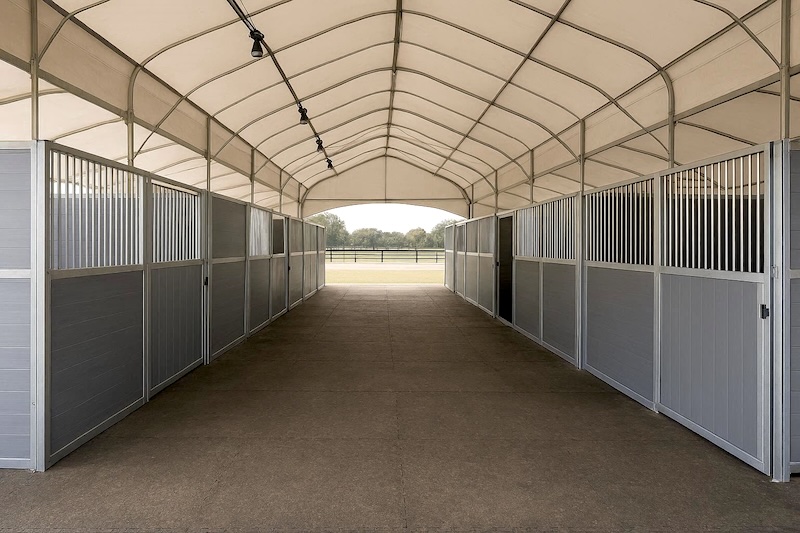
When you are planning an equestrian event, stabling is not a side detail. It shapes horse safety, traffic flow, biosecurity, staffing efficiency, and the overall rider experience. That is exactly why temporary stabling is often the best choice. It gives organizers the flexibility to scale for the event, create better layouts, reduce logistical friction, and provide horses with secure, purpose built accommodations right where they are needed.
For many venues, permanent barns simply cannot match that level of adaptability. A fixed structure limits how many horses you can host, where you can place support areas, and how quickly you can respond to changes in entries or site conditions. Temporary stalls solve those problems while still meeting the standards serious events expect.
What makes the biggest difference is choosing a provider that understands both horses and event operations. FEI Stabling stands out here because its systems are built around horse safety, modular efficiency, and turnkey support. With options such as Barn Style stalls, Back to Back Quickstables, and Single Row Quickstables, event organizers can match stall design to the demands of the venue instead of forcing the venue to work around a fixed barn.
Temporary stabling solves the biggest event day challenges
At a competitive event, the stabling area has to do far more than hold horses overnight. It needs to support smooth arrivals, safe separation, easy monitoring, grooming access, veterinary needs, and efficient movement between warm up rings, arenas, and trailers.
Temporary stabling helps because it allows organizers to:
- Add capacity without constructing a permanent barn
- Place stalls closer to arenas, wash areas, and service roads
- Adjust layouts based on class size, horse traffic, and footing conditions
- Create dedicated zones for veterinary care, stallions, or quarantine needs
- Scale up or down from one event to the next
That flexibility matters. According to the American Association of Equine Practitioners biosecurity guidelines for horse shows and events, event managers should plan for horse movement, isolation protocols, sanitation, and traffic control in a way that reduces disease risk. A modular temporary stall setup makes those measures easier to implement because organizers can design the flow around best practices instead of around the limits of an existing barn.
Better layouts mean safer horses and smoother operations
One of the clearest advantages of temporary stabling is layout control. At an event, layout is operations. If the stabling area is congested or poorly organized, everything slows down.
A well planned temporary installation can improve:
Horse to horse separation
Crowded stable rows increase the chance of stress, contact issues, and cross contamination. FEI Stabling addresses this with features such as 7.5 foot partitions in its Back to Back Quickstables, which help reduce unnecessary horse to horse interaction.
Ventilation and air quality
Ventilation is essential in any stabling environment. The Merck Veterinary Manual notes that poor ventilation contributes to airborne dust, ammonia buildup, and respiratory irritation in horses. Temporary systems with open, adaptable designs can support better airflow than enclosed, overpacked permanent structures, especially when configured with spacing and orientation in mind. FEI Stabling’s Barn Style stalls include a continuous open eave design that supports airflow while maintaining practical weather protection.
Access for staff and emergency response
When rows, aisles, and service areas are planned around the event, not inherited from an old barn, staff can move faster. That matters for feeding, mucking, security rounds, veterinary access, and emergency response. It also makes load in and load out far more efficient.
Temporary stalls support horse welfare in a changing environment
Travel and competition already place horses in a less familiar routine. The stabling setup should reduce stress, not add to it.
Research published in the journal Animals has highlighted how management conditions, including environment and handling, influence equine stress and welfare. While no stall system can remove every stressor associated with travel and competition, a calm, secure, well ventilated, and appropriately sized temporary stall can make a meaningful difference.
Key features to look for include:
- Solid, durable partitions
- Smooth, horse safe materials
- Adequate stall height
- Good airflow
- Space for grooming and daily care
- Optional accessories for lighting and management
This is another area where FEI Stabling distinguishes itself. Its stall systems feature nail free construction, kick through resistant or splinter resistant partition materials, and adaptable accessories that help organizers tailor the setup to real horse care needs. That combination of craftsmanship and practical design gives event teams more confidence that the temporary setup will perform like a professional facility, not a stopgap solution.
Temporary stabling makes biosecurity planning more realistic
Biosecurity is not optional at modern equestrian events. It is central to responsible event management.
The United States Equestrian Federation recommends clear event biosecurity planning that includes horse separation, sanitation protocols, and procedures for handling sick horses. Temporary stabling helps organizers put those plans into action.
With a modular system, you can create:
- Dedicated isolation or observation stalls
- Wider service lanes for controlled movement
- Specific entrances and exits for trailers and horses
- Distinct zones for wash racks, manure handling, and veterinary care
FEI Stabling’s Barn Style systems are especially useful here because they can be configured for veterinary blocks or wash areas, giving organizers more control over how support functions fit into the overall stable plan.
Renting temporary stalls can be more practical than building permanent capacity
For many event venues, permanent expansion simply does not make financial or operational sense. A permanent barn requires land use planning, permitting, construction costs, long term maintenance, and ongoing overhead, even if the added capacity is only needed a few times each year.
Temporary stabling offers a more efficient alternative when you need:
- Seasonal overflow capacity
- Additional stalls for major competitions
- Flexible setups for multi discipline events
- Fast deployment at temporary venues or fairgrounds
- Event specific configurations that change throughout the year
Instead of tying up capital in a fixed structure, organizers can align stabling costs with actual event demand. That approach is especially valuable for venues hosting a mix of horse trials, show jumping, dressage, clinics, or regional championships.
What makes FEI Stabling different
Many companies can provide portable stalls. Fewer can offer the level of equestrian insight, product quality, and service support that serious event organizers need.
FEI Stabling brings several advantages that help it stand apart:
Equestrian leadership
According to the company’s About FEI Stabling page, the business is led by Olympian and champion rider Clayton Fredericks. That matters. Event stabling decisions are better when they are informed by real competitive experience and a clear understanding of horse behavior, safety, and event logistics.
Turnkey service
FEI Stabling manages consultation, site assessment, delivery, and installation. For event organizers, that reduces the risk of fragmented planning and last minute setup issues. A provider that handles the full process can coordinate more effectively with the venue and help prevent avoidable layout mistakes.
Strong safety focused design
FEI Stabling emphasizes nail free construction, durable materials, and horse conscious design details. Those are not cosmetic selling points. They directly affect risk management and day to day usability.
Modular options for different event needs
Rather than offering a one size fits all setup, FEI Stabling provides multiple stall configurations. That makes it easier to choose the right fit for your venue, horse numbers, and operational flow.
If you are exploring options, the company’s portable horse stalls overview and contact page are useful starting points for planning a custom event setup.
Choosing the right temporary stabling setup for your venue
Not every event needs the same stall solution. The best choice depends on the venue footprint, horse volume, weather exposure, and support services required.
Consider these planning questions:
- How many horses need stalls, and is overflow capacity likely?
- Do you need veterinary, wash, or stallion areas?
- Will the stalls be installed indoors, outdoors, or both?
- How important is horse to horse separation?
- What kind of traffic flow do you need for trailers, staff, and horses?
- Do you need lighting, mats, or additional stall accessories?
In general:
- Barn Style stalls are ideal when you need spacious layouts and flexible support areas
- Back to Back Quickstables work well for efficient high volume event layouts
- Single Row Quickstables are a smart choice for flexible expansions or standalone rows
Why temporary stabling is often the best choice
The best equestrian events run on preparation, not improvisation. Temporary stabling gives organizers a practical way to create safer, more efficient, and more horse friendly environments without the limitations of permanent barns. It improves flexibility, supports biosecurity, helps staff work more effectively, and allows each event to build the right setup for its actual needs.
That alone makes temporary stabling a strong choice. What elevates it further is working with a provider that combines quality stall systems with genuine equestrian expertise. FEI Stabling brings both, along with configurable designs and end to end support that help events operate with more confidence from arrival through final class.
For organizers who want professional grade portable stabling that puts horse welfare and event performance first, temporary stabling is not just a backup plan. It is often the smartest plan available.