
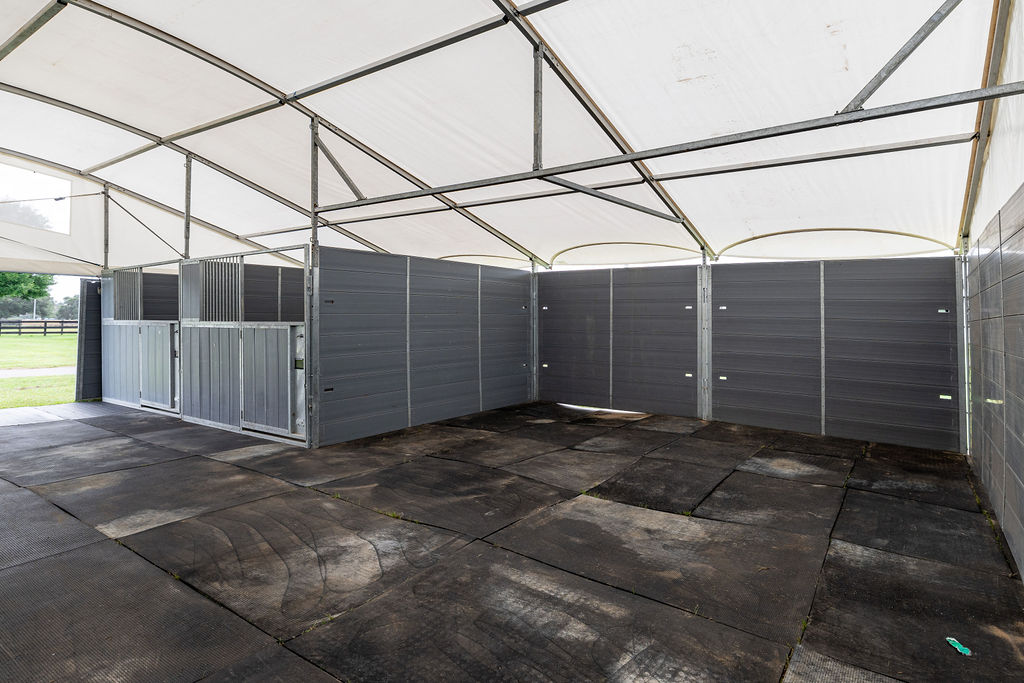
The floor beneath your horse’s hooves is one of the most consequential decisions you will make for any stable build, renovation, or upgrade. It directly affects joint health, hoof condition, hygiene, safety, and how much time and money your daily management routine actually costs you. Choose well, and you build an environment where your horse stays comfortable, sound, and healthy. Choose poorly, and you risk chronic lameness, persistent hygiene problems, and flooring that fails you long before it should.
This guide walks through every major stable flooring option available today, explains what actually separates a good choice from a poor one, and tells you what professional equestrian facilities are using. If you want practical guidance backed by real experience, read on.
Why Your Stable Floor Is About More Than Just the Surface
Most horse owners spend considerable time and energy on feed programs, turnout schedules, and veterinary care, but flooring often gets treated as a background decision. That is a mistake.
Horses stand for the large majority of their day. The surface underfoot in their stall is in constant contact with their hooves, legs, and soft tissue during every resting hour. The cumulative effect of that contact over months and years is significant. Poor flooring contributes to:
- Slipping and fall injuries from smooth or wet surfaces
- Joint stress and fatigue from standing on excessively hard ground
- Thrush and white line disease caused by persistent moisture and poor drainage
- High ammonia levels from urine pooling in low spots or soaking into porous materials
- General discomfort that disrupts rest quality and overall wellbeing
Addressing flooring properly from the start is far less expensive than treating the conditions that emerge when you do not.
Concrete: The Reliable Base That Needs More Than Itself
Concrete is the most widely installed stable floor globally, and the reasons are straightforward. It is durable, supports thorough disinfection, tolerates heavy use without breaking down, and drains well when laid with appropriate slope.
Where concrete falls short is at the point of contact. It is an unforgiving surface that puts real stress on legs and joints, particularly for horses standing still for long periods. Smooth concrete also becomes dangerously slippery when wet, especially in a stable environment where urine and water are a constant presence.
The professional consensus is clear: concrete makes an outstanding base layer. As a finished surface on its own, it should be paired with additional cushioning such as rubber matting. A bare concrete floor with nothing on top is a compromise that catches up with you in the form of horse health issues and welfare concerns.
Rubber Matting: Why It Has Become the Industry Standard
If there is a single flooring upgrade that delivers consistently strong results across virtually every stable type and management style, quality rubber matting is it. Thick rubber mats installed over a proper concrete base provide cushioning, dramatically improve traction, reduce leg and joint stress, and make daily mucking out faster and more effective.
Horse owners who transition from bare concrete to rubber matting frequently report visible changes in how their horses stand and rest, particularly older horses and those in regular work or recovery. The surface simply asks less of the body.
From a management perspective, rubber matting also reduces bedding requirements substantially. With solid rubber coverage on the floor, far less straw or shavings are needed to achieve the same level of comfort, which translates to genuine savings across a season.
The quality of installation is critical here. Poorly fitted mats shift, buckle, and create gaps where waste and moisture collect. A properly specified and installed system from a reputable supplier is what actually delivers the promised performance.
At FEI Stabling, our rubber stable mat systems are engineered for a secure, stable fit across all floor configurations, combining the cushioning your horses need with the hygiene performance your facility demands.
Clay: Time Tested, But Demanding to Maintain
Clay floors have been used in stables for centuries and retain a loyal following, particularly in traditional yards and certain regional markets. Clay offers a naturally yielding surface that many horses seem genuinely comfortable on, and it holds warmth better than concrete or rubber, which can be valuable in cold climates.
The core challenge with clay is the maintenance commitment it requires. Clay compacts and deteriorates with use and must be regularly topped up and releveled to stay functional. Drainage is poor without very careful preparation, and wet clay becomes both slippery and deeply unhygienic. Urine soaks into clay and is nearly impossible to fully extract, creating ammonia buildup that harms respiratory health over time.
Clay can serve horses with specific sensitivities or needs, but it demands a consistent, hands on maintenance routine to remain a viable surface.
Sand and Stone Dust: Not a Primary Stall Solution
Sand and stone dust are occasionally encountered in stable settings, typically in temporary setups, wash bays, or specialized functional areas. Both offer some natural drainage and a degree of cushioning underfoot.
As primary stall flooring, the drawbacks are significant. These materials shift and displace under load, requiring frequent regrading to stay level and safe. Thorough cleaning is nearly impossible because waste works down into the surface rather than sitting on top of it. In sandy conditions, horses eating from the floor are also at risk of ingesting material that can contribute to sand colic.
These surfaces belong in specific areas of a facility, not under a horse for twelve or more hours a day.
Wood: A Historic Option Best Left in the Past
Wooden floors exist in older stable buildings and some heritage properties, and there is a reason they are no longer used in new construction. Wood offers some natural warmth and a slight give underfoot, but it absorbs urine deeply, rots with sustained moisture exposure, harbors bacteria in a way that resists proper sanitation, and becomes hazardously slippery when wet. Maintenance is ongoing and labor intensive.
For any new build or significant renovation, wood flooring is simply not a practical choice when better alternatives exist at comparable or lower cost.
Interlocking Tiles: The Professional Grade Evolution
Modular interlocking rubber and polyurethane tile systems represent a meaningful step forward from traditional flat rubber mat sheets. These systems are easier to install and replace in sections, can be configured to fit virtually any stall layout without cutting or significant material waste, and often include built in drainage channels that move liquid waste away from the standing surface more efficiently than flat mats.
Textured finishes on many interlocking systems provide enhanced grip in high traffic areas such as doorways and feeding spots. For professional equestrian facilities managing multiple stalls and prioritizing both hygiene and operational efficiency, interlocking tile systems offer real advantages that justify the investment.
The Four Factors That Should Drive Your Decision
Drainage is the single most critical functional requirement in stable flooring. A surface that pools urine produces an ammonia rich environment harmful to hooves, lungs, and overall stable hygiene. Any flooring installation should include a slope of around one to two percent toward a drainage channel, and the surface itself should facilitate rather than obstruct liquid movement.
Traction is a direct safety issue. Smooth surfaces are dangerous under any conditions of moisture, and a horse slipping in a confined space is a serious injury risk. Rubber and textured tile surfaces provide reliable grip that smooth concrete and worn surfaces simply cannot match.
Joint and hoof health is where many owners underestimate the stakes. The cumulative impact of standing on a hard, unyielding surface over years is real and measurable. For older horses, competition horses, and those in regular intensive work, cushioned flooring is not a luxury. It is part of sound management.
Total cost of ownership deserves more attention than it typically gets. Upfront installation price is only one variable. Factor in how much bedding each surface requires, how frequently it will need repair or replacement, and how much labor daily maintenance actually involves. Quality rubber matting often pays for itself through bedding reduction within a few seasons.
What Well Managed Equestrian Facilities Are Actually Using
Across professional competition yards, training facilities, and high performance equestrian centers, the pattern is consistent: rubber matting or interlocking tiles installed over a sound concrete base. This combination captures the durability and hygienic cleanability of concrete with the comfort, traction, and reduced bedding demands of a quality rubber surface.
It is not a trend. It is the result of years of collective experience across facilities that cannot afford to get horse health and operational efficiency wrong.
Setting Your Horses Up Right From the Ground Up
Flooring rarely makes the headline list when people talk about what makes a great stable, but it arguably should. The surface your horse stands on for the majority of every day has a direct relationship with how sound, comfortable, and healthy they remain over time.
Whether you are building a new facility, upgrading an existing one, or simply replacing a worn out mat system, choosing the right flooring is one of the best investments you can make in your horses and your management routine.
FEI Stabling designs stable systems built around genuine performance and horse welfare at every level. Explore our complete range of stable flooring and stabling solutions to find the right fit for your horses, your facility, and the standards you want to maintain.