
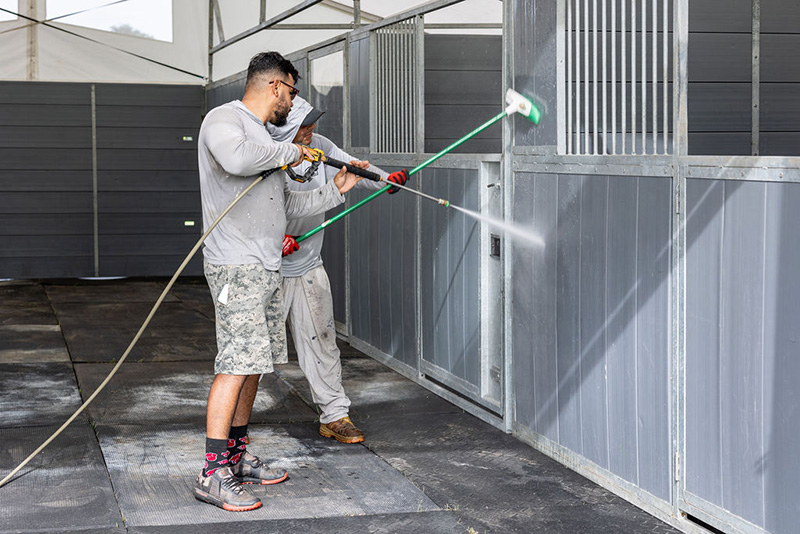
One of the most important aspects of horse ownership is providing a clean, safe and healthy environment. Regular stall cleaning and disinfection not only help prevent the spread of disease but also support respiratory health, reduce stress and create a more comfortable space for your horse. This article shares essential tips on preparing for stall cleanings, the necessary tools, the importance of regular maintenance, and how to disinfect a horse stall properly.
Disinfecting a horse stall to high standards requires attention to detail—removing organic debris and manure, disinfecting safely, and maintaining the overall environment. A clean, well-kept barn is crucial for horses’ well-being, and routine stall cleaning helps prevent disease transmission, support overall health, and keep horses happy and comfortable.
Whether you care for one horse at home or manage a large facility, establishing an effective routine makes a significant difference in long-term horse health. Proper stall care benefits both humans and horses by reducing odors, improving airflow and creating a more pleasant environment.
Prepping for Stall Cleanings
Before disinfecting a stall, it’s vital to remove all organic matter, including manure, urine-soaked bedding, blood and other waste, and ensure that any water used throughout is clean. These materials can harbor bacteria, parasites and viruses that spread disease, and removing them before cleaning helps provide the healthiest environment for your horse.
The type of bedding also contributes to stall cleanliness. Bedding such as shavings, pellets or specialized absorbent materials helps soak up moisture and control odors, making it easier to keep the stall dry and sanitary. Removing soiled bedding regularly is equally important. Promptly removing wet or contaminated material minimizes bacterial growth, reduces odor and helps prevent the spread of disease. Clean bedding also supports better hoof health and reduces the risk of skin or respiratory issues from prolonged exposure to moisture or ammonia.
Thorough mucking and stripping the stall to the floor ensure no contaminants remain hidden beneath bedding or in corners. Once the organic matter is gone, washing the stall with a detergent solution and scrubbing walls, floors and high-touch surfaces helps break down dirt, biofilm and leftover debris, creating a clean surface that allows disinfectants to work effectively.
All equipment should also be removed from the stall before cleaning. Feeders, buckets, waterers, salt holders, stall toys and removable mats should be scrubbed and disinfected separately to prevent reintroducing pathogens into the environment. After thoroughly rinsing the stall and equipment, it’s crucial to let the area dry completely—using ventilation, sunlight or fans—because moisture can dilute disinfectants and create an environment where bacteria, mold and other harmful organisms can quickly spread.
Ensuring the stall is fully dry before reintroducing the horses helps maintain a cleaner environment and reduces the risk of infection or respiratory issues.
Tools and Equipment Needed for Effective Cleaning
Using the right equipment, like a horse stall cleaning machine, can make the cleaning process easier, faster and more effective, especially in barns with multiple stalls that need cleaning. Mechanical cleaners help break up compacted bedding, lift debris and remove hidden waste that might otherwise be missed during a standard cleaning. However, they can be noisy and take extra time to set up.
Basic tools, such as a sturdy bucket and quality detergent, are essential for scrubbing down walls, floors and other surfaces before disinfecting. Once the stall is free of dirt and organic matter, applying a disinfectant helps kill bacteria, viruses and other disease-causing organisms that may linger.
A phenolic disinfectant containing phenol as the active ingredient will eliminate many microorganisms and do the job effectively. However, if you have questions or concerns about how your horse might react to a specific disinfectant, it’s best to consult your veterinarian, since every horse is different.
With the right tools, stall cleaning becomes more efficient and thorough, supporting a healthier barn environment.
Best Practices for Disinfecting Horse Stalls
Disinfecting a stall requires careful attention to detail, starting with the use of a disinfectant that is effective against a broad spectrum of bacteria, viruses and other pathogens commonly found in stables.
Using a disinfectant specifically formulated for horse stalls or other livestock environments provides an added layer of protection by targeting the microorganisms typically present in stalls and stables. These products are formulated to reduce risks to horses while still providing strong antimicrobial effects, helping prevent disease spread and supporting overall horse health.
An expert can recommend suitable disinfectants, advise on proper dilution and contact time, and help you customize your cleaning routine to meet the specific health needs of your horses, especially if there is concern about infectious disease.
Regularly disinfecting stalls beyond daily cleaning helps keep the environment sanitary. This ongoing effort reduces the risk of illness, promotes respiratory health, and creates a cleaner, more comfortable environment for both horses and the people who care for them.
Maintaining a Clean Horse Stall
Although stall cleaning requires time and effort, it ultimately helps reduce veterinary bills by decreasing the risk of infections, respiratory problems and other health concerns related to poor barn hygiene. Investing in consistent stall maintenance pays off in the long run by promoting a healthier environment and improving the overall well-being of the horses in your care.
At FEI Stabling, our temporary stall rentals are thoroughly cleaned and disinfected to provide a safe, healthy and comfortable space for your horse. Whether you need a short-term solution or a long-term arrangement, we offer secure, convenient options customized to your needs. Our back-to-back quick stables measure 10’ x 10’ x 7.5’, while our single-row quick stables are 10’ x 14’. For added flexibility, our barn-style stables can be tailored to any preferred size.
Our team also handles stall setup and maintenance, making sure each space stays clean and sanitized so you can focus on what really matters: your horse’s well-being.