
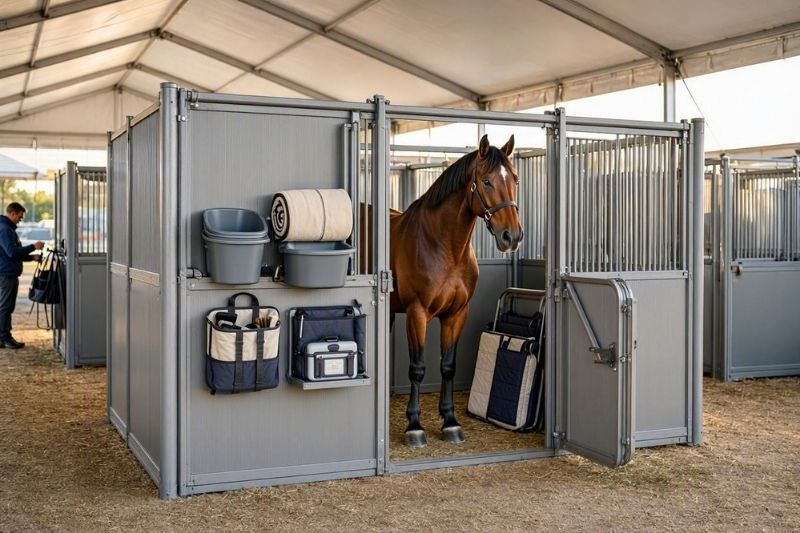
A well packed horse show stall kit does more than keep you organized. It helps protect your horse’s health, reduces last minute stress, and makes daily care at the show faster and safer. That matters, because horses at competitions are sharing space with unfamiliar horses, people, equipment, and surfaces, which increases both management pressure and biosecurity risk.
US Equestrian’s biosecurity guidance stresses practical steps like temperature monitoring, not sharing water buckets, and reporting illness quickly during competition.
If you want the short version, pack for five priorities first:
- Water and feed
- Health and biosecurity
- Stall comfort
- Daily handling and grooming
- Fast, clean setup
Once those are covered, everything else becomes easier.
Start with the must pack stall kit essentials
Your horse show stall kit should support the full day, not just arrival. Think in systems instead of random items.
Water and feed basics
Bring:
- Water buckets
- Feed tubs
- Hay bags or hay nets if your venue allows them
- Pre measured grain
- Hay for the full trip, plus extra
- Electrolytes if approved by your veterinarian
- A hose and spray nozzle if permitted
- Bucket straps or hooks
- A scoop and labeled feed containers
Why this matters: according to the American Association of Equine Practitioners, horses need about 5 to 20 gallons of water per day depending on temperature, work level, size, and health status. A horse that is drinking less at a show can become harder to manage quickly, especially in hot weather or after travel.
Health and biosecurity supplies
Bring:
- Thermometer
- Disinfectant spray or wipes safe for barn use
- Hand sanitizer
- Disposable gloves
- Paper towels
- Separate sponges and towels for each horse
- First aid kit for horse and rider
- Health papers and vaccination records
- Emergency contact sheet
- Stall card
- Small trash bags for used wipes and medical waste
This is one of the most overlooked parts of a horse show packing list. US Equestrian recommends monitoring temperature, not sharing water buckets or nose rags, cleaning hands between horses, and having an isolation plan for illness at competitions.
Stall comfort and daily care items
Bring:
- Bedding if the venue does not provide it, or extra if the provided amount is light
- Stall mats if appropriate for your setup
- Pitchfork
- Shavings fork or broom
- Muck bucket or wheelbarrow access plan
- Rubber feed mat if needed
- Fan only if the venue permits it and power is safely available
- Fly control products
- Bell boots, wraps, and shipping gear storage bag
- Extra halter and lead rope
- Quiet stall toy if your horse benefits from one
A comfortable stall isn’t just nice to have. Good airflow and clean bedding support respiratory health and reduce irritants. The University of Minnesota Extension notes that horse barns need air exchange to remove moisture, dust, pathogens, fumes, and ammonia. UC Davis veterinary guidance also warns that poor ventilation and urine buildup can expose horses to harmful ammonia levels.
A practical packing checklist by category
If you are building your own horse show stall kit, this breakdown keeps the process simple.
In the tack trunk
- Grooming kit
- Hoof pick
- Towels
- Show supplies
- Braiding kit
- Leather care supplies
- Spare reins or parts
- Number holder
- Sunscreen and insect repellent for the rider
- Chargers and battery packs
- Scissors, zip ties, and duct tape
In the stall area bin
- Bucket hooks
- Extra snaps
- Clippers and extension cord if allowed
- Broom
- Dustpan
- Disinfectant
- Stall guard if the venue allows it
- Lock for tack storage
- Permanent marker and labels
- Spare light bulbs if your setup uses portable lighting
Paperwork pouch
- Coggins and health certificates if required
- Entry confirmation
- Feeding schedule
- Medication log where applicable
- Veterinarian and farrier contacts
- Insurance details
- Route and hotel information
Horse specific extras
- Special supplements
- Slow feeder
- Soaking bucket for hay cubes or beet pulp
- Cooling sheet
- Rain sheet
- Stable bandages
- Any comfort item your horse knows from home
How to set up the stall when you arrive
A good setup routine saves time for the rest of the show.
1. Inspect the space before unloading everything
Look for sharp edges, uneven flooring, gaps, damaged latches, and poor drainage. US Equestrian compliance guidance specifically flags uneven stall flooring, gaps under walls or doors, protruding nails, and drainage issues as stabling concerns.
2. Prioritize water, bedding, and identification
Before you decorate or fully unpack, do these three things:
- Hang and fill water buckets
- Bed the stall
- Post the stall card
That gives your horse the basics immediately and makes the stall functional from the start.
3. Create clear zones
Organize the stall and aisle so every item has a home.
Use separate areas for:
- Feed
- Grooming
- Medical items
- Dirty tools
- Clean linens
- Rider gear
This reduces clutter and lowers the chance of cross contamination. It also helps everyone in the barn work faster.
4. Protect airflow
Do not crowd the stall front, doorway, or aisle with trunks, hay, and loose gear. Good airflow is part of good horse care. The University of Minnesota Extension recommends proper air exchange, and notes that even box stalls benefit from a nearby air inlet to maintain air quality.
5. Keep shared contact points clean
Buckets, door latches, pitchfork handles, and grooming tools get touched constantly. Clean them often, especially at multi day shows. USEF biosecurity resources emphasize early recognition, isolation, and enhanced biosecurity when illness is suspected.
Common mistakes that make horse show stalls harder to manage
Even experienced exhibitors run into avoidable problems. The most common are:
- Packing too much but not packing the essentials first
- Sharing buckets or towels between horses
- Forgetting a thermometer
- Storing feed where it gets damp or contaminated
- Blocking aisle space with tack trunks and loose bags
- Bringing no backup halter or lead
- Waiting until the horse arrives to start bedding and watering
- Assuming the venue setup will match your horse’s normal routine
A better approach is to build a repeatable kit, then restock it after every show.
What a smart stall setup looks like
The best show stalls feel calm, clean, and easy to work in.
That usually means:
- Safe partitions and secure doors
- Enough separation between horses
- Good natural airflow
- Durable materials that clean easily
- Flexible layouts for feed, grooming, and care routines
This is where stall design matters as much as packing. FEI Stabling stands out because its portable systems are designed around horse safety, comfort, and operational efficiency, not just temporary convenience.
Barn Style stalls feature nail free construction, kick through resistant partitions, and a continuous open eave design for natural airflow. Back to Back Quickstables provide 7.5 foot high partitions that help reduce horse to horse contact. Single Row Quickstables offer modular flexibility for facilities and event layouts that need a clean, adaptable footprint.
That difference matters at busy events. Instead of asking horse owners and organizers to piece together a workable setup on their own, FEI Stabling offers a more complete approach with consultation, delivery, and installation support.
A simple pre departure check
Before you leave for the grounds, confirm:
- Water and feed packed
- Temperature taken and logged
- Health paperwork loaded
- Stall card ready
- Buckets, hooks, and cleaning tools packed
- First aid kit stocked
- Extra hay included
- Backup halter and lead rope packed
- Grooming and show gear separated
- Contact list saved on your phone and printed
The takeaway
A great horse show stall kit isn’t about bringing everything. It is about bringing the right things, setting them up in the right order, and supporting your horse with a safe, clean, low stress environment from the minute you arrive.
If you are planning stabling for an event, facility, or temporary expansion, the right stall system makes that job dramatically easier. FEI Stabling combines horse first design, modular flexibility, and full service support to help create setups that work for horses and the people caring for them. For planning help or pricing, you can request a quote from FEI Stabling or contact the team directly.