
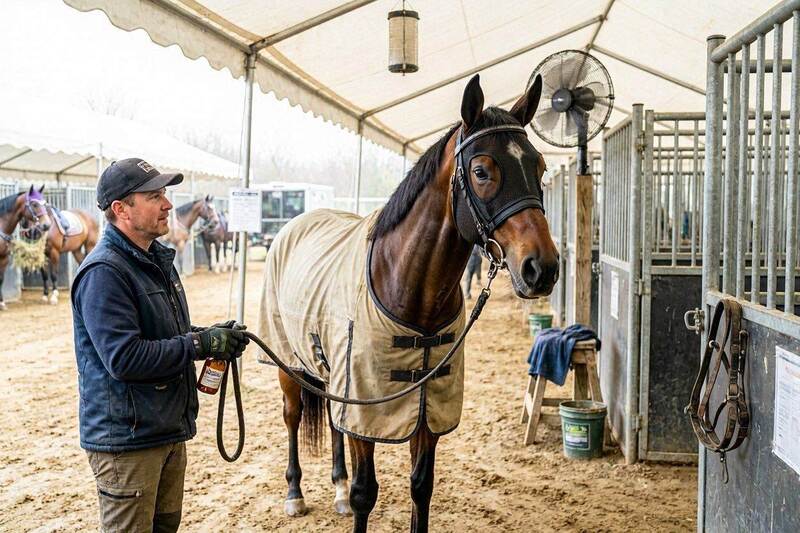
If flies seem relentless in your barn, the fix usually starts long before you reach for a spray bottle.
The most effective barn fly and pest control plan is built on four basics: remove breeding material fast, keep organic matter dry, improve airflow, and use traps or insecticides only as support tools. Extension experts consistently point to sanitation as the foundation of control because house flies and stable flies need moist organic matter to reproduce, and their life cycle can move quickly in warm conditions.
According to Penn State Extension, few flies develop if manure is removed or made unsuitable for breeding within a 7 day cycle. The Merck Veterinary Manual echoes the same point: eliminating larval habitat is the most effective control step.
That matters because not all barn flies behave the same way. House flies are nuisance pests that can carry disease-causing organisms on their bodies as they move between waste, feed, eyes, wounds, and surfaces. Stable flies are biting flies that commonly attack horses on the legs and lower body, causing pain, stomping, tail swishing, and agitation. University of Minnesota Extension notes that only a small fraction of stable flies are actually on the horse at one time, which is one reason on-horse treatments alone rarely solve a barn-wide problem.
Why barn fly problems escalate so quickly
Flies multiply fast when a barn gives them what they want: moisture, warmth, manure, soiled bedding, and leftover hay or feed. UC IPM explains that nuisance flies breed in animal waste and decaying organic matter. Common breeding sources around horse facilities include piled manure, soiled bedding, old hay around feeders, and muck near leaky waterers.
Stable flies are especially drawn to mixed organic debris. The Merck Veterinary Manual notes that larvae develop in decaying organic matter and that sanitation can account for most control. University extension guidance also points to the classic trouble spots: wet straw, manure mixed with hay, spilled feed, and damp areas along fence lines or feeding zones.
The fastest way to cut fly pressure in any barn
If you want the biggest improvement in the shortest time, start here.
1. Clean on a strict schedule
Remove manure and soiled bedding at least every 7 days during fly season, and more often in warm, humid weather or in heavily used stalls. Penn State Extension specifically recommends a maximum 7 day cycle to interrupt breeding.
2. Keep manure dry
Moisture is the real trigger. The same Penn State resource advises keeping manure below 50 percent moisture when possible. Spread manure in thin layers, tarp or roof storage areas, and avoid creating fresh wet surfaces that invite egg laying. University of Minnesota composting guidance adds that good composting can kill fly larvae when managed correctly.
3. Remove wasted hay and spilled feed daily
Old hay around feeders and fermented feed residues are prime stable fly habitat. Old hay around feeders is a common source, but it’s important to know that decaying plant material mixed with manure and urine is ideal for stable fly development.
4. Fix wet spots immediately
Leaky waterers, puddles, low drainage areas, and damp corners under mats often keep a fly problem alive even when stalls look clean. University of Minnesota Extension specifically calls out muck near leaky waterers as a common breeding source.
A barn setup that helps pest control instead of fighting it
Management matters, but barn design matters too.
Good airflow helps barns dry faster, reduces stale air, and makes conditions less inviting for flies. It also supports overall respiratory health for horses. It’s important to check air quality near bedding level where ammonia and dust tend to accumulate. It’s also recommended to ensure good air exchange in horse housing.
This is one area where FEI Stabling stands out. FEI Stabling’s Barn Style stalls and Single Row Quickstables are designed with a continuous open eave for natural airflow, while their portable stall systems are also nail free and built with kick through resistant or splinter resistant materials for horse safety.
For busy event venues, temporary expansions, or seasonal overflow needs, that combination of airflow, safety, and fast setup can make day to day sanitation easier and more consistent. FEI also highlights full installation within hours on these systems, which is a practical advantage when you need a clean, organized stabling plan fast rather than piecing one together on site.
Smart non chemical control tools
Sanitation comes first, but these tools can help reduce adult fly pressure.
Screens and fans
Screens help protect feed rooms, tack rooms, and enclosed areas. Fans can also make a meaningful difference because strong air movement makes it harder for flies to settle.
Traps and sticky tools
Traps work best as part of a larger plan, not as a stand alone fix. They can lower adult numbers and help you monitor whether the problem is getting better or worse. University of Minnesota Extension recommends traps as part of an integrated approach, and UC IPM notes that adult control is secondary to habitat removal.
Biological control
Parasitoid wasps can support control of house flies and stable flies, particularly around manure storage areas, though results depend on timing and manure conditions. Beneficial wasps are part of the natural predator community in manure storage, and that broad pesticide use can harm them.
When insecticides make sense
Insecticides can help, but they are support tools, not the foundation.
Use them when adult fly numbers are high and you are already correcting the breeding source. Space sprays can offer quick knockdown. Residual products may help on resting surfaces when used according to label directions. Baits can be useful for house flies, but they do little for biting stable flies. Extension guidance consistently warns that chemical control alone will disappoint if wet breeding material remains in place.
Resistance is another reason to be careful. Insecticide resistance is a real concern with filth flies and recommends rotating products by mode of action rather than exposing multiple generations to the same chemistry.
A practical rule is simple: clean first, dry second, trap third, treat last.
A daily and weekly fly control routine that actually works
Every day
- Pick stalls and remove wet bedding
- Sweep up spilled grain and hay
- Check waterers, hoses, and drain areas for leaks
- Empty trash and keep lids closed
- Look for new hot spots around feeders, wash areas, and manure carts
Every week
- Remove or properly compost manure
- Spread field applied manure in thin layers where appropriate
- Clean under mats, along walls, and in corners that stay damp
- Replace sticky traps or service bait stations
- Review fly pressure so you can catch outbreaks early
What FEI Stabling brings to the conversation
Many articles stop at insect biology. FEI Stabling helps bridge the gap between theory and real barn use.
Because FEI is led by horse people and focused on portable and temporary equine stabling, the brand understands that pest control is not just a spray choice. It is a stall layout issue, an airflow issue, a cleaning access issue, and a horse safety issue. FEI Stabling’s employs equestrian leadership and a full service approach, from consultation through installation. That matters for facilities and event organizers who need stabling that is not only durable, but also practical to maintain during long show days and quick turnarounds.
For more facility planning ideas, visit the FEI Stabling blog or reach out through the FEI Stabling contact page.
Closing thoughts
Better fly and pest control in the barn usually comes down to better habits and better setup. Remove manure on time. Keep bedding, feed areas, and storage zones dry. Improve airflow. Use traps and insecticides strategically, not automatically. When your stall system supports cleaning, ventilation, and horse safety, the whole program gets easier to maintain.
That is the real goal: fewer pests, healthier horses, and a barn that feels cleaner, calmer, and easier to manage every day.